ADA-Compliant Portable Restrooms: Planning Rentals With Availability in Mind
When individuals intend portable restroom services, they normally begin with head count, duration, and budget plan. Accessibility commonly gets pressed a little later in the discussion, often because coordinators assume one bigger system somewhere on site will certainly cover the requirement, and occasionally because they are unsure what the guidelines actually require. That hesitation can produce actual problems for guests, employees, and participants who require an accessible toilet and must not have to search for it, struggle to reach it, or uncover that it is practically present but functionally unusable.
This is where thoughtful planning issues. An ada compliant portable bathroom is not simply a standard system with a bigger impact. It has to benefit the people that depend on it. That indicates the system itself, the course to it, the way it is recognized, and the area around everything matter. If any kind of one of those items is disregarded, the outcome can look compliant theoretically while falling short in practice.
I have seen this take place at community events, church events, momentary job hosting areas, and outside private celebrations that suddenly grew larger than any person initial thought of. Someone orders an ada mobile bathroom since they intend to do the ideal thing. The supplier supplies it. After that the unit obtains put on uneven grass behind a food outdoor tents, or on soft crushed rock that turns to ruts after a few hours of traffic. No one planned to produce a barrier, yet intent does not change the experience for the person that can not use the washroom independently.
What the ADA needs for portable restroom rentals
For mobile toilet services in the USA, the controlling government requirement is the 2010 ADA Requirements for Accessible Style, as interpreted by the Gain access to Board and the Department of Justice. That structure is what rental planning must be constructed around. For collections of portable single-user commode devices, a minimum of 5 percent of the units in each collection should be accessible. That uses also at short-term events.
That 5 percent policy catches many people off-guard. They think access can be handled by positioning one ada compliant mobile commode someplace on a huge building. The basic concentrates on each cluster, not just the overall number across an entire event. If you divided toilets into separate banks throughout a fairground, sports field, celebration course, or workplace, you require to assume collection by collection. A website can be well supplied overall and still fall short the practical test if an easily accessible device is missing from the area where people in fact require one.
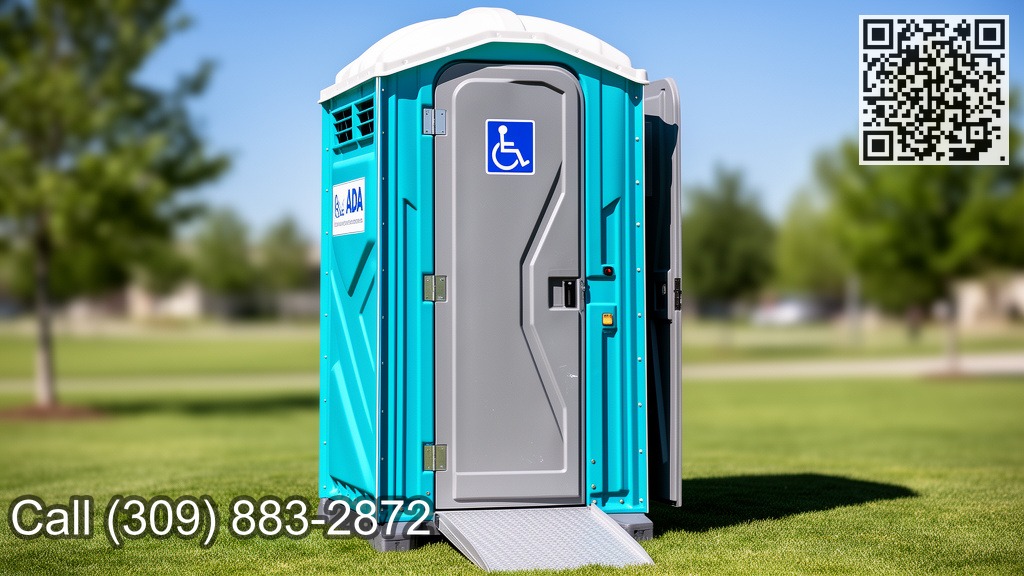
The available system need to also be identified with the International Sign of Ease Of Access. That seems basic, yet it matters. Individuals should not have to open numerous doors or ask personnel for directions to determine which system is the available one. Clear recognition reduces stress and anxiety and protects dignity.
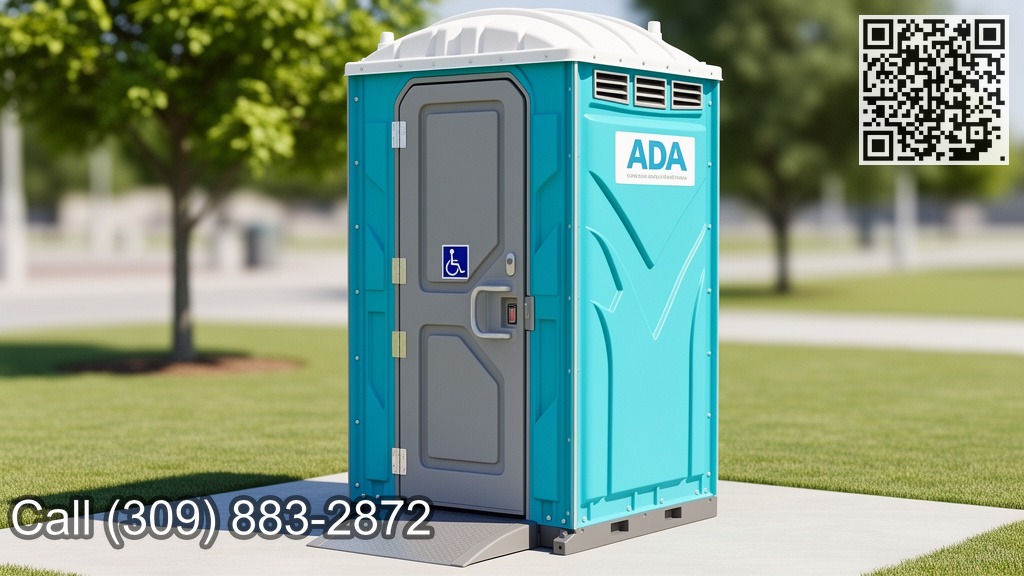
The device also requires an accessible path and entry. If ramps or landings are needed, those features have to abide by ADA technical needs. This is just one of one of the most usual preparation failures because individuals concentrate on the toilet box itself and ignore the ground conditions around it. A certified system positioned at the top of a muddy rise or behind a narrow gateway does not deliver purposeful access.
Inside the unit, technical demands additionally apply. The commode space need to fulfill relevant requirements for clearances, transforming area, door maneuvering clearances, and the appropriate rules for grab bars and water wardrobe clearances. That is why a true ada certified accessible portable washrooms setup depends upon the unit model and format, not simply the salesman saying, "This one is the obtainable one."
The preparation blunder that triggers one of the most trouble
The most significant error is treating accessibility as an add-on rather than a starting condition.
If you wait till the end of the rental order to ask for an ada easily accessible mobile washroom, you are most likely to opt for whatever happens to be readily available. You likewise reduce your alternatives for proper placement. On busy weekend breaks or throughout huge seasonal events, inventory can tighten up, particularly for specialty devices. Also if a supplier can provide an ada portable commode, your website might already be outlined in a way that leaves only bad positioning choices.
A much better approach is to plan the easily accessible systems at the same time you map traffic circulation, car parking, queuing, and solution locations. Think about how a person gets from arrival indicate bathroom and back once again without detours, steep grades, or obstructions. Think about that will make use of the site after dark, in damp weather, or during peak crowding. Access is not different from procedures. It is operations.
At one outdoor event I aided review after the truth, the organizers had technically rented out an ada handicap obtainable portable washroom. The issue was that they placed it past a row of vendor camping tents due to the fact that they wanted it "out of the way." Throughout the occasion, the course tightened as outdoors tents moved and supply boxes accumulated behind cubicles. The washroom existed, the sign was on the door, and yet several participants can not comfortably reach it. The concern was okay intent. It misbehaved sequencing. They made design decisions initially and ease of access decisions second.
Why "accessible" and "functional" are not always the exact same thing
This is the component that is worthy of honesty. A rental business may provide an ada certified portable commode that satisfies the called for technological functions, but the coordinator or site manager still manages whether the experience is functional on the ground. The ADA common reaches beyond the shell of the unit. The route matters. The entrance issues. Maneuvering area matters.
A couple of small decisions can reverse the benefit of the right system. Placing it where automobiles obstruct the technique, fencing it inside a limited service hallway, or establishing it on a surface area that moves under wheels can all transform a certified product into an inaccessible experience.
The most trusted organizers I recognize stroll the path face to face prior to shipment preferably. They do not simply point at a place on a website map. They check out grade, width, ground firmness, drain, and nearby congestion. They ask what takes place if it rains. They ask whether maintenance vehicles can service the system without forcing momentary obstacles right into the path of travel. That type of sensible thinking saves shame later.
Cluster mathematics is simple, yet site layout is where judgment comes in
The 5 percent rule is uncomplicated in idea, but in real planning, the tougher concern is how you specify and put clusters. If an event has portable bathrooms near the major stage, near sporting activities fields, and near parking, those are not just one giant mixed restroom location since they all take place to be on the exact same residential property. People use the closest financial institution available to them. If a person with a wheelchair handicap needs to cross half the place to locate the only available unit, the setup is missing out on the point.
This is why great site preparation commonly feels less like checkbox conformity and even more like audience compassion. Image the https://rowanfkno389.alderbrief.com/posts/ada-handicap-available-portable-restroom-rental-for-inclusive-occasion-access visitor that arrives with the additional entry. Image the volunteer who functions 6 hours at the boundary booth. Picture the family member who is aiding a person navigate the grounds during a jampacked duration. Where will they reasonably anticipate to discover an accessible restroom? That is where one needs to be.
There is also a difference in between lawful minimums and practical planning. The minimum requirement informs you the flooring, not constantly the wisest quantity for comfort and flow. I would beware not to state a formula beyond the verified rule, yet it is reasonable to state that some sites gain from getting greater than the bare minimum if the grounds are spread out, if attendance patterns are irregular, or if heavy use is expected in one area.
Construction sites need a cautious distinction
One detail that can puzzle purchasers is the therapy of building and construction websites. The ADA Criteria identify mobile toilet devices at building and construction websites utilized exclusively by construction personnel, which are exempt from the portable-toilet availability scoping need cited in the older 1991 standard. That exemption is slim and context issues. For general mobile commode leasings, the accessible-unit need remains.
That difference should not be stretched beyond what it claims. If a site is not limited to building and construction personnel in the way the exception contemplates, organizers must not think they are outside the ease of access needs. It is just one of those locations where individuals listen to a fragment of a guideline and defalcate it generally. When in doubt, decrease, verify what establishing you are actually dealing with, and prevent making assumptions based on a single tag like "work site" or "momentary use."
What to ask before you authorize the rental order
A brief discussion with the vendor beforehand can prevent an unusual amount of problem. You do not require to come to be a code expert over night, but you do need sufficient quality to know what you are getting and how it needs to be installed.
Here are the inquiries worth asking:
- Is this unit a real ada compliant portable washroom made to meet applicable ADA toilet-room technological requirements?
- How needs to the unit be placed so the available course and entrance continue to be usable on this details site?
- Does this location require a ramp or touchdown, and if so, how will that be managed in a way that satisfies ADA requirements?
- Is the device plainly marked with the International Symbol of Accessibility?
- If we have numerous bathroom clusters, the number of accessible devices must be designated to each collection rather than to the site as a whole?
That list may seem fundamental, but it changes the discussion. Rather than purchasing a generic "big portable toilet," you are signaling that availability is part of the scope, not an afterthought.
Placement decisions that are entitled to more attention
Most gain access to issues are positioning problems.
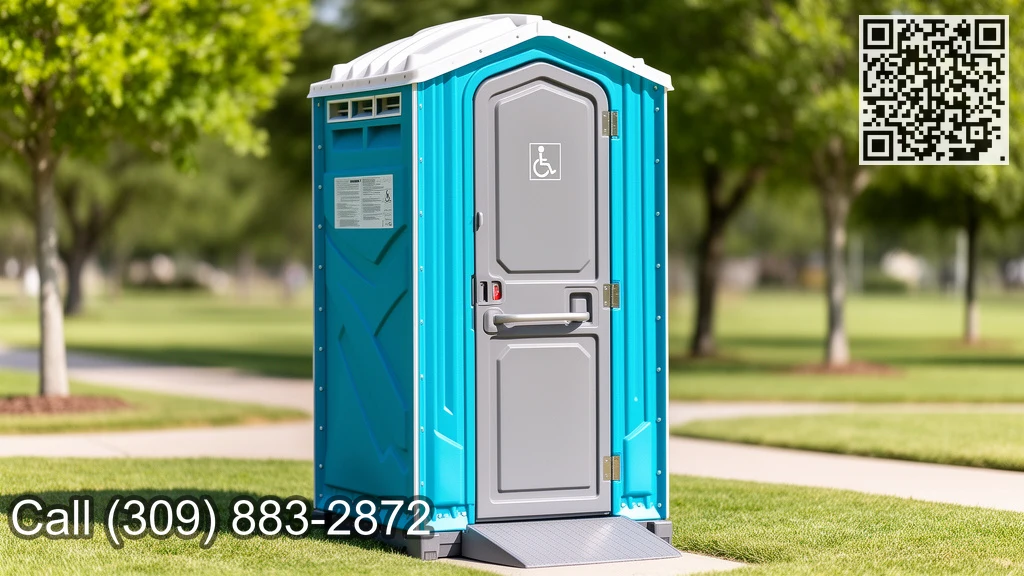
Ground surface is the first thing I would certainly consider. A website that seems great when completely dry can come to be deeply troublesome after a few hours of foot traffic or weather. Soft turf, loosened fill, or spun gravel can influence gain access to even prior to a person gets to the door. The standards call for an easily accessible course and entry, so it is not enough that a solution vehicle can drop the system there.
Next comes group habits. Mobile washrooms typically wind up beside hosting locations, dumpsters, food lines, or temporary fence because those spaces feel easy to assign. Then the paths tighten up as the event comes active. A route that looked charitable throughout setup may come to be narrow when coolers, stanchions, cord covers, or supply carts show up. In functional terms, the easily accessible route ought to be secured from the creep of event clutter.
Door handling clearance is an additional factor that individuals neglect since they think it is only an indoor problem. Actually, the room outside the door impacts whether a customer can come close to, open, and get in the device efficiently. If the door swings into a confined hallway or toward a sloped spot of ground, the problem starts before the person crosses the threshold.
I likewise advise thinking about exposure. An ada portable washroom does not need to be showcased, however it must be simple to discover. If a guest has to ask three employee where the obtainable device is, the site is not functioning in addition to it should. Signs, view, and intuitive placement all help.
Temporary events still count
There is a persistent misconception that since an occasion is short-term, the availability expectations are somehow unwinded. They are not. The Access Board has explained that the accessible-unit requirement uses also at short-term occasions. Momentary conditions can make accessibility preparation harder, yet they do deficient optional.
This issues for events, outdoor wedding events, showing off events, local celebrations, fundraisers, fairs, and pop-up activations. "It is only for eventually" is not a protection to bad planning. Somehow, temporary events need even more technique since there is less time to remedy errors when the group arrives.
I have also seen momentary occasions make an incorrect economic climate choice by cutting the obtainable system initially when budget plan stress hits. That is precisely the wrong area to cut. If price comes to be a concern, reduce ornamental additionals, modify unnecessary features, or reassess format prior to you compromise accessibility. An individual who requires an ada mobile commode is not requesting a costs function. They are asking for basic accessibility to the event every person else is attending.
The language purchasers use can create confusion
Search terms and supplier summaries are not constantly constant. You will see phrases like ada portable toilet, ada mobile washroom, ada certified mobile toilets, ada-compliant mobile bathroom, and ada compliant accessible portable bathrooms made use of somewhat interchangeably in marketing. Sometimes a vendor implies a genuinely compliant obtainable system. Often they simply indicate "bigger than requirement."
That is why product labels alone are not enough. If somebody advertises an ada mobile toilet rental, the genuine inquiry is whether the unit and the installment will certainly please the relevant ease of access needs. A bigger door or a much more large cabin does not by itself respond to that concern. Clearances, turning space, door handling, route, entry, and recognition all matter.
For customers, exact language helps. Instead of requesting "a handicap porta potty," define the requirement in conformity terms. Request an ada compliant mobile bathroom and validate just how it will be placed. If you have numerous restroom collections, claim that in advance. If the website surface area is irregular or remote, say that also. Vendors can typically react better when the request is concrete.
Accessibility becomes part of hospitality
There is a lawful dimension to this subject, however there is also a human one. People keep in mind just how a website made them really feel. An occasion can have thoughtful programming, gorgeous decor, or a solid yield and still leave a sour memory if standard needs were difficult to satisfy. Bathroom accessibility sits high up on that checklist due to the fact that it affects convenience, personal privacy, and self-reliance in a really prompt way.
When access is succeeded, many people barely see the planning behind it. The course really feels noticeable. The unit is very easy to find. The entry works. The customer can handle the visit with self-respect and without requiring special support. That is the conventional worth going for. Peaceful competence.
I have actually listened to organizers fret that focusing on conformity will make the preparation process cold or bureaucratic. In technique, I have actually discovered the opposite. Availability planning has a tendency to develop your understanding of the guest experience on the whole. As soon as you begin thinking thoroughly concerning courses, surface areas, congestion factors, and wayfinding for an accessible restroom, you typically boost the website for everybody else too.
A sensible way to assess your website before shipment day
Before the device gets here, it aids to do one based evaluation of the real area. This does not need to be fancy. It just needs to be honest.
Use this quick lens:
- Can an individual get to the toilet by an available route without going across unstable, blocked, or extremely limited spaces?
- Is the device in the exact same general area where individuals would reasonably anticipate toilet accessibility, instead of isolated much away?
- Will the entry continue to be useful after fencing, vendor gear, crowd lines, and maintenance demands are added?
- Is the easily accessible system determined plainly with the International Icon of Accessibility?
- If there is more than one toilet collection, does each cluster fulfill the accessible-unit requirement rather than depending on one far-off unit?
That final walk-through catches most of the problems that are expensive or unpleasant to repair later.
Compliance is getting wider interest, not less
Even if your current concern is strictly concerning washroom services, it is worth seeing the broader atmosphere. ADA conformity is getting continual attention throughout sectors. Current government support around web and mobile ease of access for state and city governments mirrors that the conformity landscape is active and advancing, not fading right into the history. That does not change the technological rules for mobile toilets, however it does advise companies that availability is a current functional responsibility.
For event coordinators, municipalities, institutions, nonprofits, and private hosts, that broader context should encourage a more mature way of thinking. Access is not a side subject entrusted in the nick of time. It belongs to accountable planning, just like safety, insurance policy, and crowd flow.
Getting it right without overcomplicating it
The good news is that easily accessible toilet preparation is manageable when you begin early and stay particular. You do not require a remarkable overhaul or a lawful memorandum for each occasion. You require the right device, sufficient of them in each collection, appropriate recognition, and a truly available path and entry. You likewise need the self-control to safeguard that configuration once the rest of the site completes around it.
If you are ordering an ada certified portable washroom for the first time, maintain the concentrate on function. Where will people require it? Just how will they arrive? Will the course still work three hours right into the event, after weather condition, traffic, and configuration sprawl have had their claim? Those are the questions that separate a simply delivered system from a genuinely obtainable one.
Handled well, an ada obtainable mobile washroom does more than please a requirement. It informs guests and workers that their existence was expected, valued, and prepared for. That is what availability in method ought to feel like.
 Ask ChatGPT
 Ask Grok
 Ask Perplexity
 Ask Claude
 Ask Google AI
 Ask You